
One hand, fast cash
Each hand has a fixed rupee value per point. The first player to declare a valid hand wins the pool. Typical entry starts around ₹8 per point, with 1 point = ₹0.1 cash.
Rummy is the most played skill-game format inside the GetRummyLudo app. Three main formats shape the table flow and the scoring pace. Below explains what changes between them, the hand-declaration rules and how to read the in-app points table.
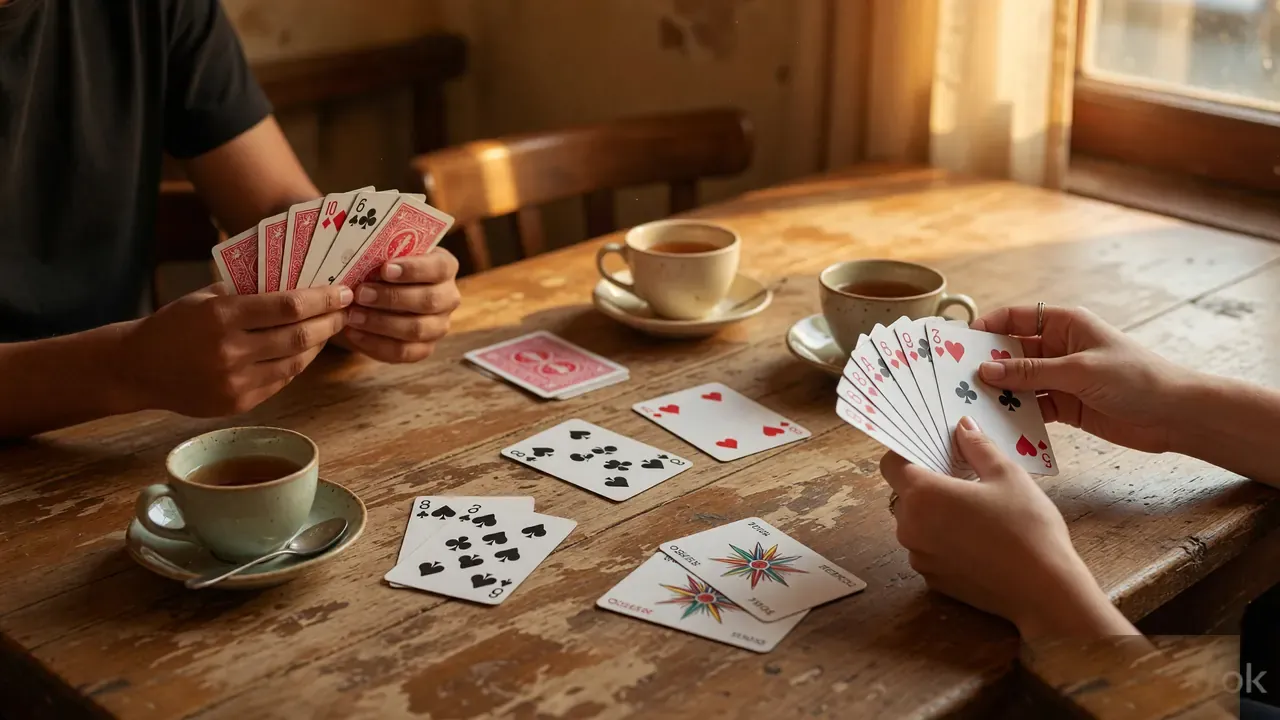
Each hand has a fixed rupee value per point. The first player to declare a valid hand wins the pool. Typical entry starts around ₹8 per point, with 1 point = ₹0.1 cash.
Players contribute to a fixed pool. The game continues until one player is eliminated by reaching the pool limit. Slower but with bigger pot sizes.
A set number of pre-dealt hands. Chips transfer between players per deal. Typical entry is ₹5 with 2 deals as the default configuration.
A valid rummy hand needs at least one pure sequence (a run of consecutive cards from the same suit with no joker), one more sequence or set, and all 13 cards arranged in valid combinations. A second sequence may use a joker as a substitute.

149
152
154
155
160
191
195
203
230
1883
1887
1888The minimum entry varies per table but typically starts at ₹8 for Points, ₹5 for Deals. The in-app lobby shows the entry amount next to each table.
Unmatched cards at declaration count against the loser. Face cards count 10 points each, numbered cards count face value, aces count 1, jokers and wild cards count 0.
Yes, but live tables can lag. The app auto-disconnects on lost connection; your hand is protected if you reconnect before the timer expires.
A drop exits the current hand before declaring. A first-drop typically scores 25 points, a middle-drop 50, and a full-count loss without a valid declaration 80 points.
Pool rummy sessions average 30-45 minutes on a 101 pool and 60-90 minutes on a 201 pool. Deals rummy is faster - two deals default to roughly 20 minutes including the inter-deal handoff. A middle drop on Deals returns half the chips to the player; the remainder stays in the pot. The Points table is the cleanest format to verify your hand-declaration skills before moving to Pool.